



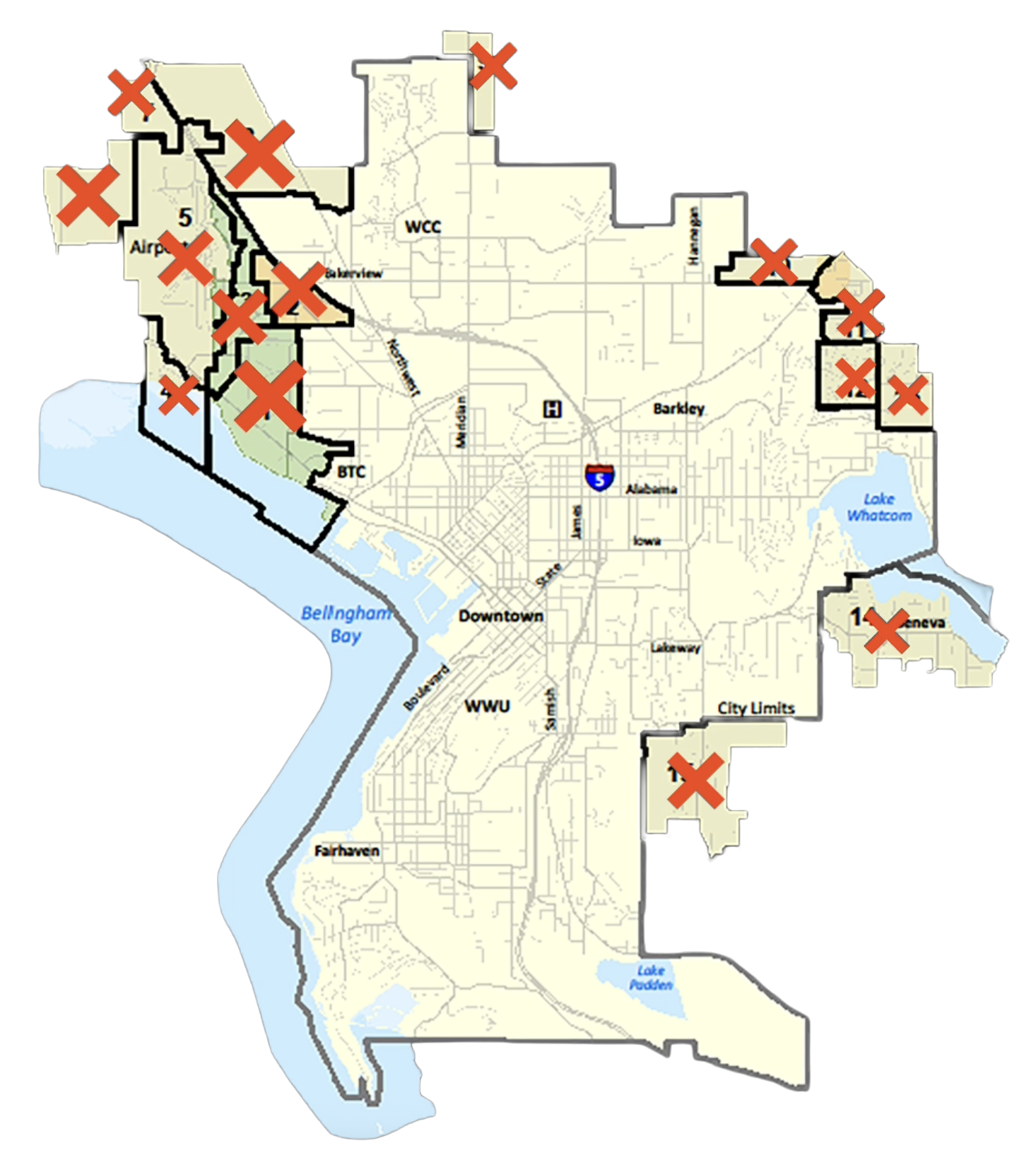
Over 20 years, Bellingham: - Promised to annex 15 Urban Growth Areas for housing, yet annexed 0, leaving planned housing unbuilt. - Promised 8,400 single-family homes but delivered only 2,700 (26%) because annexations and land-use decisions fell short. - Designated 1,594 acres as “buildable land,” but included golf courses, watersheds, and land later acquired by the city, making much of it unavailable for housing. - Used $200M in park levy funds to purchase 850 acres of land in areas previously set aside for housing, directly reducing available sites. - Cited a housing crisis, while policy barriers established by the city itself limited additional housing supply.
The result: America’s most unaffordable small city (8.8:1 price-to-income ratio)
The question: Were these outcomes the result of unintended consequences or specific policy choices?
The evidence: After reviewing official reports, budget documents, land purchase records, and policy decisions over two decades and across multiple administrations, one consistent conclusion emerges.
This appendix documents Bellingham's approach to housing policy outcomes. To understand trends in other Washington cities, we examine the available data.
BELLINGHAM BY THE NUMBERS (2005-2025)
Promises Made:
- 15 UGAs designated for annexation
- 10,487 dwelling units capacity
- 8,400 single-family homes (80% of mix)
- 1,594 acres of buildable land
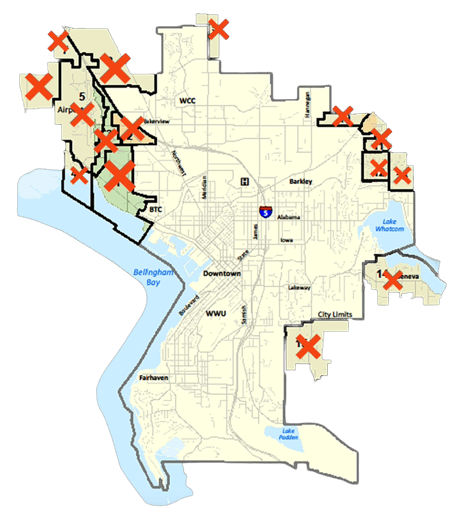
Promises Broken
- 0 UGAs annexed (0 of 15 = 0% delivery)
- 2,400 single-family homes delivered (24% of promised)
- 80% apartments delivered (complete reversal of promised mix)
- 850 acres purchased by the city (removed from supply)
- 400 acres zoned residential
Financial Impact:
- $200M Greenways levy collected
- $45M/year parks budget (3× per capita vs.peers)
- $4.3M/year staff costs (50-70 employees)
- 5% property tax revenue growth (2014-2024)
Housing Outcomes:
- 8:1 price-to-income ratio (worst in America for small cities)
- 47% homeownership rate (down from 54% in 2000)
- 68% of young adults leave after college (up from 42% in 2000)
- $700K median home (up from $165K in 1998)
The Pattern: Policy constraints are documented in official reports over two decades and across several administrations.
PART 1: THE 2005 BASELINE—WHAT BELLINGHAM PROMISED
The 2005 Comprehensive Plan: Explicit Commitments
Bellingham’s 2005 Comprehensive Plan didn’t use vague aspirational language. It made specific, measurable commitments:
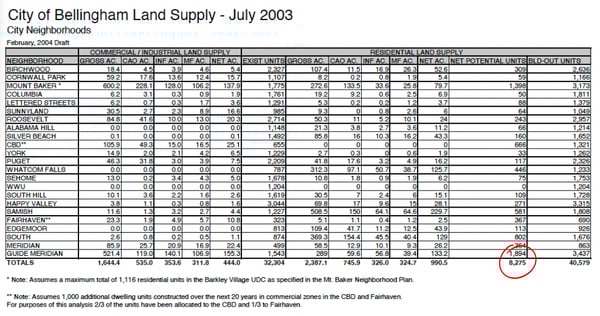
“The City has identified 1,594 acres of buildable residential land within city limits, with capacity for 10,487 dwelling units over the 20-year planning period.” — 2005 Comprehensive Plan, Land Use Element
Bellingham designates 15 Urban Growth Areas for annexation to accommodate projected growth. Priority areas include Geneva (25 acres) and North Yew Street (938-unit capacity).” — 2005 Comprehensive Plan, Growth Management Appendix
“The City will maintain its historical 80/20 split between single-family and multifamily housing to preserve neighborhood character while accommodating growth.” — 2005 Housing Element
These weren’t suggestions. They were the legal basis for growth management under the GMA.
The key commitments:
- 1,594 acres of buildable residential land within city limits
- Capacity for 10,487 dwelling units over the 20-year planning period
- 15 Urban Growth Areas designated for annexation to accommodate growth
- 80/20 housing mix (single-family/multifamily) to maintain neighborhood character
These specific, measurable commitments underpinned Bellingham’s growth strategy and legal obligations.
Over 20 years, Bellingham has not met these commitments.
The Golf Course Fraud: How Bellingham Inflated Capacity
Bellingham’s calculation of 1,594 acres of “buildable” residential land included North Bellingham Golf Course.
Why this matters:
- Golf courses are not buildable land—they’re active recreational facilities.
- Including them in capacity calculations inflates numbers by hundreds of units.
- By including such land, cities can claim 'adequate capacity,' thereby enabling them to block expansion and avoid political opposition to growth.
- When paper calculations show “enough” capacity, politically difficult UGA expansions can be avoided
This pattern was not isolated.
The 2005 capacity analysis also included:
- Watershed lands (which the city would later claim were “unsuitable for development”)
- Environmentally constrained parcels (wetlands, steep slopes, critical areas)
- Property that the city itself would purchase with Greenways levy funds over the next 20 years
Capacity figures were deliberately inflated, making it politically easier to avoid expanding UGAs and thus constraining housing supply.
Including land that is unlikely to be developed in “buildable lands” calculations may result in overstated capacity and limit expansion options.
The UGA Annexation Promise
Bellingham identified 15 Urban Growth Areas for annexation. Under the Growth Management Act, cities are expected to annex UGAs to address housing demand.
Priority UGAs designated in the 2005 Plan:
Geneva: 25 acres designated for urban housing - Status: Ready for immediate annexation - Capacity: Small but crucial addition to supply - Location: Adjacent to existing services
North Yew Street: ~938 units capacity - Status: Priority #1 for annexation (reaffirmed 2018) - Capacity: Nearly 1,000 homes for families - Location: Contiguous to city, infrastructure ready
Multiple smaller UGAs: Combined capacity of several thousand units - Status: Designated for phased annexation as city capacity filled - Combined capacity: 3,000-4,000 additional units - Timeline: Staggered over 20-year planning period
The plan projected these annexations would occur as city land ran out, providing the legal path for continued growth.
During the subsequent 20 years, Bellingham did not annex any UGAs.
Not one.
0 of 15 UGAs were annexed, leaving none of the city’s expressed commitments in this area fulfilled.
What Success Would Have Looked Like
If Bellingham had executed its 2005 plan as promised, the outcomes would have been:
Housing Production: - 10,487 dwelling units built over 20 years (524/year average) - 8,400 single-family homes (80% of mix, preserving ownership opportunities) - 2,087 multifamily units (20% of mix, providing rental options)
UGA Annexations: - Several UGAs annexed as city capacity filled (Geneva, North Yew, others) - Phased expansion maintaining infrastructure alignment - Adequate land supply preventing artificial scarcity
Market Outcomes: - Homeownership maintained at 54% rate (2000 baseline) - Price-to-income ratio stable around 4.3:1 (1998 level) - Young adults able to purchase homes in the community where they work - Teachers, nurses, firefighters able to afford homeownership - Economic diversity maintained across neighborhoods
This wasn’t aspirational—it was the legally required execution of an adopted plan.
Instead, Over 20 Years, Bellingham Would:
✗ Permit only 2,700 single-family homes (26% of the promised 8,400)✗ Annex exactly 0 UGAs (0% of the promised 15)
✗ Reverse the housing mix to 80% apartments (exact opposite of promise)
✗ See homeownership drop from 54% to 47%
✗ Reach an 8.8:1 price-to-income ratio (worst in America)
✗ Purchase 850 acres with park funds, removing them from the housing supply.
✗ Build the wrong housing type in the wrong locations at the wrong price points
This appendix details how these outcomes resulted from policies supported by city leadership.
They resulted from consistent policy decisions over two decades and multiple city administrations.
Let’s trace exactly how it happened.
PART 2: THE EXECUTION—WHAT ACTUALLY HAPPENED (2005-2025)
The Housing Delivery Failure
Bellingham’s 2005 comprehensive plan promised capacity for 10,487 dwelling units. After 20 years:
|
Total Units |
10,487 |
~10,000 |
95% |
|
Single-Family |
~8,400 (80%) |
2,700 (27%) |
26% |
|
Multifamily |
~2,100 (20%) |
~7,300 (73%) |
348% |
|
UGAs Annexed |
15 areas |
0 |
0% |
Note: Bellingham met the numeric target but implemented a substantially different housing mix, delivering more rental units than ownership units.
The city delivered a different housing type than initially planned.
The promise was 80% single-family homes (ownership opportunities for working families).
The delivery was 80% apartments (rental housing under institutional ownership). This represented a substantial change from the previously stated goal.
This outcome aligns with the effects of not annexing land for single-family development, leading to higher-density infill and more apartment construction.
The $200 Million Land Grant. While describing a housing shortage, Bellingham allocated Greenways Levy funds—originally approved for parks and open space—to the purchase of properties, which were then withdrawn from the potential housing inventory.
Greenways Levy Summary (2005-2025):
- Total collected: ~$200 million over 20 years (~$10M/year)
- Total acres purchased: 850 acres.
- Inside city limits: 467 acres
- In UGAs designated for housing: 215 acres
- Just outside UGAs: 168 acres
Of the 850 acres purchased, 215 were within Urban Growth Areas explicitly designated for housing.
The city acquired land previously designated for housing.
When a significant portion of land acquisitions occurs in areas designated for housing development, this reduces the potential housing supply.
THE GENEVA BAIT: A Timeline of Systematic Obstruction
Geneva provides irrefutable proof of intentional obstruction. Follow the timeline:
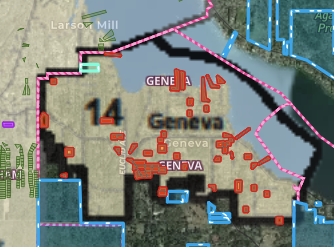
2005: Geneva Designated for Housing - City Comprehensive Plan: “Geneva UGA: 25 acres suitable for residential development” - Zoning: Urban Residential - Status: Ready for annexation when city capacity fills - Infrastructure: Adjacent to existing services, minimal extension costs
2005-2008: City Begins Purchasing Geneva - City purchases first parcels in Geneva using Greenways levy funds - Stated purpose: “Parks and open space acquisition” - Actual location: Inside area designated for urban housing development - No documentation provided regarding rationale for designating this land as parkland while also designating it for housing in planning documents
2009-2015: City Completes Geneva Acquisition - Total acquisition: 25 acres (100% of Geneva UGA) - Funding source: Greenways levy (originally “for parks”) - Development activity: Zero permits, zero annexation discussions - Housing built: Zero
2016-2024: Geneva Remains in UGA, but Undeveloped - Years in UGA: 19 years - Annexation requests: Zero - Infrastructure extensions: Zero - Housing permits issued: Zero - City explanation: None provided
2025: Geneva REMOVED from UGA Designation - City’s new claim: “Always unsuitable due to watershed concerns” - Documentation of watershed issues in 2005 plan: None exists - Explanation for 20-year designation if unsuitable: None provided - Current status: City-owned “open space,” permanently removed from housing supply
The Three Questions Officials Can't Answer:
If Geneva was unsuitable watershed land, why was it designated for housing in 2005?
Either: - The 2005 plan was fraudulent (knowingly designated unsuitable land for housing) - Or the 2025 reclassification is fraudulent (removing suitable land from supply)
Both statements cannot be true simultaneously.
Why continue to include it in the 2015 update?
Why was it included in the Urban Growth Area in 2015 if there were issues with the "watershed"? - Why was it zoned for residential development? - Why did the Comprehensive Plan call it “suitable for residential development”?
Why wait 20 years to “discover” it’s unsuitable for housing?
Watershed characteristics don’t change over 20 years. Either: - City officials knew in 2005 it was unsuitable (fraudulent designation then) - Or city officials know now it’s actually suitable (fraudulent removal now)
The timing is damning: The city “discovered” Geneva was unsuitable for housing only most of the development had already happened.
The Pattern This Reveals:
This isn’t incompetence. This is a four-step removal process:
Step 1: DESIGNATE land for housing - Satisfies GMA requirements for adequate capacity - Allows city to claim “we have enough land” - Prevents pressure for UGA expansion
Step 2: PURCHASE as much property with park funds - Removes land from the private market - Prevents any housing development - Uses voter-approved levy funds (politically defensible)
Step 3: BLOCK development for years/decades - Never annex despite designation - Never extend infrastructure - Never issue permits - Creates artificial shortage
Step 4: RECLASSIFY as unsuitable - Claim land was “always” unsuitable (despite original designation) - Justify not annexing (too late now, it’s “open space”) - Permanently remove from housing supply
Geneva isn’t an isolated case—it’s the template.
North Yew Street: Same pattern (designated → purchased 50% → never annexed → 0 units built)
Multiple smaller UGAs: Same pattern (designated → purchased → blocked → removed)
When you control the land designated for housing, you control whether housing gets built.
And Bellingham chose not to build.
The North Yew Street Pattern: Systematic Blocking of Priority #1 UGA
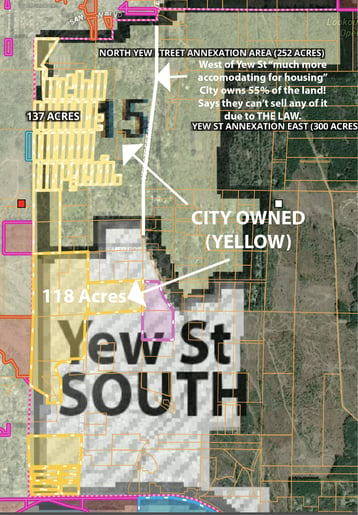
North Yew Street was Priority #1 for annexation in 2018, with capacity for approximately 938 homes. This wasn’t a marginal area—it was the city’s top priority for housing expansion.
What happened:
Land Ownership Pattern: - Total developable area: ~180 acres - City purchased with Greenways funds: ~90 acres - City now owns approximately 50% of Priority UGA #1
Infrastructure Investment: - Sewer extension built: No - Water extension built: No - Road improvements made: No
Development Activity: - Annexation attempts: Zero - Housing permits issued: Zero - Units built: 0 of 938 promised
The Strategic Obstruction:
By purchasing 50% of the developable land in Priority UGA #1, the city didn’t just reduce capacity—it killed all development potential.
Here’s why:
Fragmented Ownership Kills Projects: - Developers need contiguous parcels for efficient development - When the city owns 50% in scattered parcels, the remaining private land becomes unbuildable - Even owners who want to develop can’t because infrastructure won’t pencil for partial development - Result: 100% of capacity blocked by controlling 50% of land.
No Infrastructure Investment Prevents Development: - Without sewer extension, no development can occur (septic systems prohibited in UGA) - Without water extension, no development can occur (well systems inadequate) - City has authority to extend infrastructure but chooses not to - Result: Land remains undevelopable even where the city doesn’t own it.
No Annexation Means No Development: - Land in UGA but outside city limits cannot develop at urban densities - Annexation required to access city services and zoning - City has authority to annex (voter-approved process exists) but chooses not to - Result: 20 years of designation, zero years of action.
The Timeline:
- 2005: North Yew designated in UGA for urban housing
- 2018: Elevated to Priority #1 for annexation (capacity for 938 homes critically needed)
- 2005-2025: City purchases 50% of developable land with Greenways funds
- 2005-2025: Zero sewer/water infrastructure extensions
- 2005-2025: Zero annexation attempts despite Priority #1 status
- 2025: Still designated, still undeveloped, still Priority #1, still 0 of 938 units built
The Result: Priority #1 for annexation. 20 years. 0 units built. 0 annexation attempts. 50% purchased by the city. 0% infrastructure investment.
This isn’t a failure to execute a plan. This is a successful execution of blocking a plan.
The Outcomes: America’s Most Unaffordable Small City
After 20 years of systematic obstruction, the results are measurable and devastating:
Housing Market Collapse: - Median home price: $700,000 (up from $165,000 in 1998 = +324% inflation-adjusted) - Median household income: $80,000 - Price-to-income ratio: 8.8:1 (historically affordable is 3-4:1) - Down payment required (20%): $140,000 - Years to save down payment at 10% of income: 8.8 years
Homeownership Destruction: - Homeownership rate: 47% (down from 54% in 2000) - First-time buyer qualification rate: 18% (down from 48% in 1998) - Age of first-time buyers: 41 years (up from 32 in 2000) - Young adult homeownership (ages 25-34): 12% (down from 34% in 2000)
Workforce Exodus: - Teachers (median $68K): Cannot afford median home (need $210K income) - Nurses (median $72K): Cannot afford median home - Firefighters (median $65K): Cannot afford median home - Retail workers (median $38K): Severely cost-burdened for basic housing - Young adults leaving after college: 68% (up from 42% in 2000)
Rental Market Crisis: - Median rent: $2,200/month (up from $650 in 1995 = +193% inflation-adjusted) - Average rent burden: 42% of income (crisis level is >30%) - Vacancy rate: 1.2% (healthy market is 5-7%) - Households displaced (2015-2024): 4,500+
Small Builder Collapse: - Small builder market share (2010): 68% of permits - Small builder market share (2024): 22% of permits - Small builder businesses closed (2010-2024): 37 firms
Economic Impact: - Average commute time for essential workers: 45-90 minutes each way - Annual commute cost (gas, wear): $4,000-8,000 per worker - Businesses unable to fill positions: 40% report housing as primary barrier - Economic diversity loss: Working-class neighborhoods gentrifying
The Rankings: - #1 Most Unaffordable Small City in America (8.8:1 ratio) - #3 Most Expensive City in Washington (behind Seattle and Bellevue) - #7 Fastest Price Growth in America (2010-2020)
These aren’t abstractions. They’re measured outcomes of 20 years of policy choices.
The Budget Reality: Why the Crisis Won’t Be Solved
Understanding Bellingham’s budget reveals why the housing crisis will never be voluntarily solved by city officials.
City Revenue Dependency on High Property Values:
Total City General Fund Revenue (2024): $132 million
Revenue Sources: - Property Tax: $68 million (51.5% of revenue) - Sales Tax: $31 million (23.5%) - Utility Tax: $12 million (9.1%) - Other: $21 million (15.9%)
Property-Value Dependent Revenue: - Property Tax: $68M (based on assessed values) - Greenways Levy: $11M (value-based: 23.4¢ per $1,000 assessed) - Real Estate Excise Tax: $1.9M (based on sale prices) - Total: $80.9M = 75.5% of General Fund revenue
Over three-quarters of city revenue depends on high property values.
Solving the housing crisis—by definition—means lowering property values. That would devastate the city budget.
The True Cost of Solving the Housing Crisis (From the City’s Perspective)
If Bellingham restored affordability by adding supply, here’s what the city would lose:
Property Tax Revenue Loss:
Current situation: - Median home price: $700K - Assessed value: ~$560K (80% of market value) - Property tax rate: 0.93% - Annual property tax per home: $5,208
If affordability restored: - Median home price: $385K (Income Covenant Model price for 80% AMI) - Assessed value: ~$308K - Same tax rate: 0.93% - Annual property tax per home: $2,864 - Loss per home: $2,344/year
For 10,000 affected single-family parcels: - Total annual property tax loss: $23.4 million
Greenways Levy Revenue Loss:
Current situation: - Levy rate: 23.4¢ per $1,000 assessed value - Median assessment: $560K - Annual Greenways levy per home: $131
If affordability restored: - Same levy rate: 23.4¢ per $1,000 - Median assessment: $308K - Annual Greenways levy per home: $72 - Loss per home: $59/year
For 40,000 total residential parcels: - Total annual Greenways loss: $2.36 million
Real Estate Excise Tax Loss:
Current situation: - REET rate: 0.5% - Median sale price: $700K - REET per sale: $3,500 - Annual sales: ~2,000 homes - Annual REET revenue: $7M
If affordability restored: - Same REET rate: 0.5% - Median sale price: $385K - REET per sale: $1,925 - Loss per sale: $1,575 - Total annual REET loss: $3.15M
TOTAL ANNUAL REVENUE LOSS: ~$28.9 Million
That’s: - 22% of the entire General Fund budget - Equivalent to the entire Parks Department budget ($45M over multiple funds) - More than the entire Police Department budget ($27M) - Enough to eliminate 250-300 city jobs.
What $28.9M in lost revenue would require: - Eliminate entire $4.3M Greenways staff line (50-70 jobs lost) - Cut $24.6M from other departments (Police? Fire? Streets? All?) - Or raise other taxes dramatically to compensate - Or slash city services across the board
The Choice City Officials Face:
Option A: Restore Housing Affordability - Add supply through UGA annexations and reduced restrictions - Housing prices drop to affordable levels (4-5:1 ratio) - City loses $28.9M annual revenue - 250-300 city jobs eliminated - Parks budget cut by 50%+ - Property tax increase required to maintain services - Political backlash from existing homeowners (equity losses) - Political backlash from city employees (job losses)
Option B: Maintain Housing Crisis - Block supply through refusing UGA annexations and maintaining restrictions - Housing prices remain high (8.8:1 ratio) - City maintains $28.9M annual revenue stream - All 250-300 jobs protected - Parks budget maintains $45M level - No tax increase needed - Political support from existing homeowners (equity gains) - Political support from city employees (job security)
Every rational incentive pushes officials toward Option B.
Not because they’re evil. Because the system rewards maintaining the crisis and punishes solving it.
The Greenways Levy: America’s Most Expensive Parks System
Bellingham claims the Greenways Levy funds “parks and open space.” But the numbers tell a different story.
2024 Parks Department Budget: $45 Million
Source: 2024 Greenways Annual Report, Page 18 - Total Parks Department Budget
Budget Breakdown: - General Fund allocation: $13.9M - Real Estate Excise Tax (REET): $1.9M - Greenways staff salaries: $4.3M - Greenways project funding: $16.2M - User fees & other revenue: $5.7M - Cemetery Fund: $760K - Golf Course operations: $2.1M - TOTAL: $45 million per year
Per Capita Comparison:
|
Bellingham |
95,000 |
$45M |
$474 |
Baseline |
|
Spokane |
220,000 |
$32M |
$145 |
-69% |
|
Eugene |
175,000 |
$28M |
$160 |
-66% |
|
Tacoma |
220,000 |
$48M |
$218 |
-54% |
|
Boise |
235,000 |
$42M |
$179 |
-62% |
|
Average (peers) |
— |
— |
$175 |
-63% |
Bellingham spends $474 per capita on parks.
Peer cities average $175 per capita.
Bellingham spends 2.7 times the peer-city average.
Why the massive difference?
It’s not the superior parks. It’s not better maintenance. It’s not more acres per capita.
It’s staff costs.
The $4.3M Staff Line: Funding 50-70 Jobs
The Greenways levy was originally voter-approved for “land acquisition and capital projects.” No operational expenses. No staff salaries.
But in 2012, city officials changed the law.
The Greenways ordinance was amended to allow “staff costs associated with Greenways administration.”
Result: $4.3 million in Greenways funds per year now go to staff salaries.
What does the $4.3M fund do?
- Average city employee cost (salary + benefits): $70,000-85,000/year
- $4.3M ÷ $75K average = 57 employees
- Actual Greenways-supported positions: 50-70 full-time equivalent jobs
These positions include: Parks planners, Environmental reviewers, Acquisition specialists, Project managers, Administrative staff, GIS analysts, and Public outreach coordinators.
The pattern:
Original Greenways purpose: Buy land for parks
Expanded Greenways purpose: Buy land + pay staff to buy land + pay staff to plan for land + pay staff to review land + pay staff to manage land
The result: A self-perpetuating system where the crisis (the need for more open space because city blocks are housing on existing open space) justifies the department (which blocks housing to create a need for more open space).
The ADU Capacity Inflation: Manufacturing Phantom Housing Supply
Bellingham projects significant housing capacity from Accessory Dwelling Units (ADUs). But the assumptions inflate actual delivery by 162%.
City’s ADU Capacity Assumptions:
- People per ADU: 5
- Percent of ADUs actually rented: 100%
- Therefore, 5,000 ADUs house 12,500 people
Actual ADU Performance (Seattle/Portland Studies):
- People per ADU: 6 (reality: many are studios or 1BR, often single occupants)
- Percent of ADUs actually rented: 60% (reality: many used for storage, home office, family members, or vacant)
- Therefore, 5,000 ADUs house 4,800 people
The Gap:
- City claims: 12,500 people housed
- Reality: 4,800 people housed
- Overstatement: 7,700 people = 162% inflation
Sources: - Seattle ADU Impact Study (2019) - actual occupancy data - Portland ADU Performance Analysis (2020) - rental rates and occupancy - Bellingham Comprehensive Plan (2025) - capacity assumptions
Why This Matters:
When cities count ADUs at 2.5 people per unit with 100% occupancy, they’re manufacturing phantom capacity. This phantom capacity then justifies: - Not expanding UGAs (“we have capacity!”) - Not annexing land (“ADUs will handle growth!”) - Not permitting single-family development (“density will solve it!”)
But when the ADUs don’t materialize at projected rates, or don’t house as many people as claimed, the capacity shortfall becomes a housing crisis.
Bellingham’s ADU assumptions create phantom capacity for 7,700 people who will never actually be housed.
The 2025 Comprehensive Plan: Aspirational Language, Zero Binding Commitments
The 2025 Comprehensive Plan was supposed to fix the housing crisis. An analysis of the Land Use and Housing chapters reveals otherwise.
Total policies examined: 103
Binding commitments (specific, measurable, enforceable): 0
Policy Language Breakdown:
Soft/Aspirational Language: 46 policies (45%) - “Encourage…” - “Support…” - “Promote…” - “Consider…” - “Explore opportunities to…”
Monitoring Only: 10 policies (10%) - “Track…” - “Evaluate…” - “Review…” - “Monitor…” - “Assess…”
Vague Action Verbs: 47 policies (45%) - “Work with…” (with whom? how? by when?) - “Coordinate…” (how? what’s the deadline?) - “Facilitate…” (what does success look like?) - “Implement programs…” (which programs? what budget?)
What’s Missing:
- No specific annexation commitments (“Will annex Geneva by 2027”)
- No measurable housing targets (“Will permit 2,000 SF homes by 2030”)
- No accountability mechanisms (“If targets not met, trigger automatic UGA expansion”)
- No binding timelines (“Infrastructure to North Yew by Q4 2026”)
- No consequence for failure (“If 0 annexations again, the city manager is terminated”)
What a Binding Commitment Looks Like:
❌ Weak: “The city will explore opportunities to expand housing supply in appropriate locations.”
✅ Strong: “The city will annex Geneva UGA by December 31, 2026, extend sewer infrastructure by June 30, 2027, and issue first building permits by December 31, 2027. Failure to meet these milestones will trigger automatic expansion of remaining UGAs without further review.”
The 2025 Plan contains zero commitments like the strong example above.
A comprehensive plan should define what will be built, where, when, and how success is measured.
Bellingham’s 2025 plan avoids all four.
This isn’t a plan to solve the housing crisis. It’s a plan to continue managing the crisis indefinitely while avoiding accountability.
PART 3: WHY IT HAPPENED—INCOMPETENCE OR INTENT?
After examining 20 years of evidence—official reports, budget documents, land purchase records, comprehensive plans, and policy decisions across multiple administrations—we must confront a fundamental question:
Was this catastrophic incompetence or deliberate intent?
The Incompetence Theory
If this were mere incompetence, we would need to believe that Bellingham officials accidentally:
Planning “Accidents”: - ✗ Included golf courses in buildable land calculations (inflating capacity by hundreds of units) - ✗ Included watershed lands later deemed “always unsuitable” (phantom capacity) - ✗ Counted public land that would “never” be developed (more phantom capacity) - ✗ Used ADU assumptions 162% higher than actual performance (even more phantom capacity)
Land Acquisition “Accidents”: - ✗ Purchased 215 acres in the exact UGAs designated for housing (25% of all Greenways acquisitions) - ✗ Purchased 50% of Priority UGA #1 (North Yew), blocking all development - ✗ Purchased 100% of Geneva UGA, then removed it from housing designation - ✗ Spent $200M on land acquisition while claiming housing shortage
Execution “Accidents”: - ✗ Delivered 0 of 15 promised UGA annexations over 20 years (0% delivery rate) - ✗ Built 2,700 single-family homes instead of promised 8,400 (26% delivery rate) - ✗ Completely reversed the housing mix from 80% ownership to 80% rentals - ✗ Never extended infrastructure to Priority #1 UGA despite 20 years of designation
Legislative “Accidents”: - ✗ Changed Greenways law in 2012 to allow $4.5M/year for staff costs (benefiting city) - ✗ Refused to change Greenways law to allow land sales (would help housing crisis) - ✗ Changed law when beneficial to city, refused when beneficial to residents.
Pattern “Accidents”: - ✗ Maintained this pattern across two decades - ✗ Maintained this pattern across multiple mayors - ✗ Maintained this pattern across multiple city councils - ✗ Maintained this pattern across multiple planning directors.
Each individual “accident” strains credulity.
Taken together, they form an impossible pattern.
Cities don’t accidentally purchase the exact land they’ve designated for housing. They don’t accidentally deliver zero annexations over 20 years. They don’t accidentally change laws in ways that exclusively benefit themselves while refusing changes that would help residents.
The incompetence theory requires believing in two decades of perfectly coordinated incompetence across dozens of officials—all making mistakes that uniformly benefit the city budget while harming housing supply.
That’s not incompetence. That’s impossible.
The Intent Theory
If we assume these outcomes were intended, suddenly every piece of evidence makes perfect sense.
The pattern isn’t a series of accidents—it’s the successful execution of a system designed to restrict housing supply while maximizing city revenue.
Let’s examine the incentive structures:
- FINANCIAL INCENTIVES: The Budget Depends on High Prices
Revenue Dependency: - 75.5% of General Fund revenue is property-value dependent ($80.9M of $107.2M) - Property tax: $68M (based on assessed values) - Greenways Levy: $11M (value-based formula: higher prices = more revenue) - REET: $1.9M (based on sale prices)
The Math: - Solving crisis (prices drop) = $28.9M annual revenue loss - Maintaining crisis (prices rise) = Revenue grows automatically
2014-2024 Example: - Property values increased 77.5% - Property tax revenue increased automatically by $30M (77.5% of $38.6M baseline) - No tax rate increase needed - No voter approval required - Budget balanced by unaffordability
The Incentive: Every dollar of property value increase generates automatic revenue growth. Solving the housing crisis would eliminate this revenue stream.
- EMPLOYMENT INCENTIVES: The Crisis Justifies Jobs
Greenways Staff Line: $4.3M = 50-70 Jobs
These positions exist because: - Land needs to be acquired (creating need for acquisition staff) - Acquired land needs to be managed (creating need for management staff) - Managed land needs to be planned (creating need for planning staff) - Planned projects need oversight (creating need for project managers)
The Cycle: - Buy land → Need staff to manage land → Need more levy money → Buy more land → Need more staff - Housing shortage → Need to acquire more open space → Need more staff → Housing shortage worsens
If the housing crisis were solved: - Reduced land acquisition need → Reduced staff need - Reduced Greenways levy revenue → Can’t fund current staff levels - Result: 50-70 job losses
The Incentive: Every Greenways-funded employee has a financial interest in continuing land acquisition, which requires maintaining the housing shortage that justifies the need for more “open space.”
- POLITICAL INCENTIVES: Voters vs.Non-Voters
Who Benefits from High Prices: - Existing homeowners (equity gains averaging $200K-400K) - Current voters (homeownership rate still 47%) - Politically active residents (homeowners vote at 2× the rate of renters)
Who Is Harmed by High Prices: - Renters (no equity, rent burden at 42% of income) - Young adults (68% leave, can’t buy homes) - Future residents (priced out, can’t move to Bellingham)
The Political Math: - Beneficiaries: Vote in every election, donate to campaigns, attend council meetings - Harmed parties: Don’t vote (renters), can’t vote yet (future residents), voted and left (young adults)
The Incentive: Politicians respond to current voters, not future residents. Existing homeowners are voters. Future residents are not.
Result: The political system rewards maintaining scarcity (making current voters wealthier) and punishes adding supply (reducing current voters’ equity).
- SYSTEMATIC EXECUTION: Not Random, But Strategic
If this outcome was intended, the 20-year pattern makes perfect sense:
Phase 1 (2005): Inflate Baseline - Include golf courses in capacity (create phantom supply) - Include watershed/constrained lands (more phantom supply) - Include public lands (even more phantom supply) - Purpose: Justify not expanding UGAs (“we have capacity!”)
Phase 2 (2005-2015): Strategic Acquisition - Purchase 215 acres in UGAs designated for housing - Purchase 50% of Priority #1 UGA (block all development) - Purchase 100% of Geneva (remove from supply entirely) - Purpose: Remove land from housing supply while claiming “parks and open space”
Phase 3 (2005-2025): Zero Expansion - Deliver 0 of 15 promised annexations - Never extend infrastructure to Priority UGAs - Block every mechanism for supply expansion - Purpose: Create artificial scarcity, drive up prices, increase revenue
Phase 4 (2012): Capture Revenue - Change Greenways law to allow staff funding - Create 50-70 jobs, dependent on continued levy - Lock in $4.3M annual operational expense - Purpose: Make system self-perpetuating (jobs depend on crisis continuing)
Phase 5 (2025): Avoid Accountability - Write Comprehensive Plan with zero binding commitments - Use aspirational language (“encourage,” “support,” “consider”) - Avoid measurable targets or deadlines - Purpose: Maintain flexibility to continue blocking expansion without violating “plan”
This isn’t a series of accidents. It’s a logical sequence executed over 20 years.
- THE SMOKING GUN: Selective Law Changes
The clearest proof of intent comes from examining when Bellingham changes laws:
Laws Changed When Beneficial to the City:
✓ Modified Greenways ordinance (2012) to allow $4.5M/year for staff salaries - Original law: “Land acquisition and capital projects only” - Amended law: “Including staff costs associated with administration” - Beneficiary: City (50-70 jobs created/preserved) - Process: Quietly amended, minimal public notice - Result: $4.3M annual expense now legally allowed
✓ Modified Greenways ordinance (2015) to allow operational expenses - Original law: “Capital projects only” - Amended law: “Including operational and maintenance costs” - Beneficiary: City (Parks Department budget expansion) - Process: Routine ordinance update - Result: Ongoing operational costs now eligible for levy funding
Laws Refused When Beneficial to Residents:
✗ Refused to modify Greenways ordinance to allow property sales for housing - Proposed: Allow selling excess Greenways property to address housing crisis - City response: “Legally prohibited by voter-approved levy” - Reality: Same law was modified twice for city benefit - Result: $1 billion in city-owned land locked up, unavailable for housing
✗ Refused to modify Greenways ordinance to allow property sales for budget relief - Context: City facing $10M budget shortfall (2023-2024) - Proposed: Sell some Greenways property to close budget gap - City response: “Against voter intent, legally problematic” - Reality: Modifying levy for budget purposes already done (staff costs) - Result: Budget crisis continues, services cut, while city owns $1B in land.
The Pattern:
When confronted about selling Greenways' property to address the housing crisis, officials claim: “That would be against the law.”
But those same officials changed that same law twice—once to fund staff salaries, once to cover operational expenses.
The law is malleable when it serves city interests.
The law is inflexible when it might solve the housing crisis.
This selective malleability proves intent.
If officials truly believed they couldn’t change Greenway's law, they wouldn’t have changed it twice already. If they truly believed they were bound by “voter intent,” they wouldn’t have expanded the levy beyond its original purpose.
They change the law when it benefits them. They cite the law as unchangeable, even though changing it would help residents.
That’s not incompetence. That’s strategy.
Why This Matters Beyond Bellingham
Bellingham is not a unique case of corruption. It’s simply the most extreme example of a system that operates throughout Washington State.
Every Washington city operates within the same incentive structures:
- Revenue Dependency on High Property Values
All Washington cities fund operations largely through property taxes.
When property values rise: - Revenue grows automatically - No tax rate increase needed - No voter approval required - Budget problems disappear
When property values fall: - Revenue drops automatically - Services must be cut or taxes raised - Voters get angry - Budget crises emerge.
Result: Every city has a financial incentive to maintain high property values, which creates an incentive to restrict supply.
- Political Power of Existing Homeowners
In every Washington city: - Homeowners vote at higher rates than renters - Homeowners attend council meetings - Homeowners donate to campaigns - Future residents can’t vote yet.
Result: Every city faces a political incentive to protect existing homeowner equity, thereby restricting supply.
- Growth Management Act Structure Provides Legal Tools
The GMA gives cities and counties legal mechanisms to restrict supply: - UGA boundaries (can be kept artificially small) - Critical area regulations (can remove land from supply) - Comprehensive Plan capacity math (can be inflated with phantom supply) - County veto over UGA expansion (can block city growth indefinitely) - 10-year planning cycles (can lock in restrictions for a decade)
Result: Every city has legal tools to restrict supply without appearing to violate the law.
- Lack of Accountability for Failure
Bellingham’s 0/15 annexation delivery rate proves: - Cities face no consequences for failing to deliver housing - Officials face no sanctions for missing targets - Comprehensive Plans have no enforcement mechanism - State doesn’t intervene when cities violate GMA housing requirements.
Result: Every city knows it can fail to deliver housing without consequences.
The Bottom Line:
Bellingham followed these incentive structures to their logical conclusion. Other cities are on the same path—just 5-15 years behind.
Seattle, Spokane, Tacoma, Olympia: You’re following Bellingham’s trajectory.
The same financial incentives exist. The same political incentives exist. The same legal tools exist. The same lack of accountability exists.
The only difference: Bellingham got there first.
But the system produces the same outcome everywhere it operates. It’s not about individual officials being corrupt. It’s about a system that rewards restricting supply and punishes expanding it.
Until these structural incentives change, every Washington city will eventually reach Bellingham’s endpoint.
WHAT OTHER WASHINGTON CITIES CAN LEARN FROM BELLINGHAM
Bellingham isn’t uniquely corrupt or incompetent. It’s uniquely far along a path every GMA city is following.
If you’re in Seattle, Spokane, Tacoma, Olympia, Vancouver, or any other Washington city, you’re 5-15 years behind Bellingham on this same trajectory.
The question isn’t whether your city will reach Bellingham’s crisis point. The question is when—and whether you’ll recognize the warning signs in time to change course.
The Warning Signs You’re Following Bellingham’s Path
🚩 WARNING SIGN #1: Your Capacity Calculations Include:
✗ Golf courses or active recreational facilities counted as “buildable land.”
✗ Watershed or environmentally constrained parcels are included in residential capacity.
✗ Public land (schools, parks, fire stations) is counted as developable.
✗ ADU projections assuming 100% occupancy at 2.5+ people per unit
✗ Redevelopment assumptions 3-7× higher than historical rates
✗ “Urban villages” or “density bonus” capacity that’s never been built anywhere
Why this matters: Inflated capacity allows cities to claim “adequate supply” while blocking expansion. If your buildable lands analysis includes land that will never actually be built, your crisis is being manufactured.
What to do: Demand that your city release its methodology for buildable land. Ask: “What percentage of ‘capacity’ is on public land, golf courses, or environmentally constrained parcels?” If they won’t answer or the number exceeds 20%, your capacity is fictional.
🚩 WARNING SIGN #2: Your City Purchases Land in Areas Designated for Housing
✗ Park levies, conservation funds, or open space bonds are used to buy land in UGAs
✗ City acquisitions concentrated in areas designated for urban development.
✗ Purchases justified as “protecting critical areas” that were zoned for housing in the same plan
✗ Land purchased and later removed from urban designation.
✗ City owns significant portions (>25%) of priority annexation areas.
Why this matters: When the city controls land designated for housing, it determines whether housing is built. Bellingham didn’t accidentally buy 215 acres in UGAs designated for housing—it systematically targeted that land for removal from supply.
What to do: FOIA request all city land acquisitions in the past 10 years. Map them against your UGAs and designated growth areas. If more than 15% of acquisitions are in housing growth areas, your city is following Bellingham’s playbook.
🚩 WARNING SIGN #3: Your UGA Annexations Consistently Fail
✗ County denials citing “adequate capacity” based on inflated city calculations
✗ City doesn’t aggressively fight county denials (accepts them quietly)
✗ Years or decades pass between annexation attempts
✗ Each new Comprehensive Plan shows “sufficient capacity” despite previous shortfalls
✗ City rhetoric shifts to “we don’t need to expand, density will solve it.”
✗ Infrastructure never extended to priority UGAs despite years of designation
Why this matters: The UGA trap is the core mechanism. If your city isn’t expanding UGAs while population grows, scarcity is being engineered. Bellingham went 20 years without annexations—by the time that pattern becomes visible, the crisis is entrenched.
What to do: Track UGA expansion vs population growth over the past 20 years. If UGA grew <10% while the population grew >15%, you’re in the trap. Demand immediate UGA expansion or state intervention.
🚩 WARNING SIGN #4: Your Housing Mix Shifts Toward Rentals
✗ Single-family permits are declining year-over-year.
✗ Multifamily permits are increasing as a share of total permits.
✗ City celebrates “meeting numeric housing targets” while homeownership rate drops.
✗ Comprehensive Plan shifts from prioritizing ownership to “housing diversity.”
✗ Homeownership rate declining (5+ percentage point drop over 10 years)
✗ The average age of first-time buyers is increasing.
Why this matters: The 80/20 reversal happened because Bellingham refused to expand land supply. When you force all growth into infill, you end up with apartments, not single-family homes. The housing type reveals whether your supply is adequate.
What to do: Track housing permits by type over 10 years. If single-family dropped from 70%+ to below 40% of permits, your land supply is too constrained. Demand UGA expansion to restore ownership opportunities.
🚩 WARNING SIGN #5: Your Revenue Increasingly Depends on High Property Values
✗ Property tax revenue is growing faster than inflation + population growth.
✗ Property-value-based levies expanding (parks, transportation, etc.)
✗ Budget documents showing revenue sensitivity to assessed values
✗ Finance department projects assume continued high property value growth.
✗ Levy renewal campaigns emphasize “no tax rate increase” (because values provide revenue growth)
✗ Officials resist reforms that would lower property values (even as they claim to want affordability)
Why this matters: Once 70%+ of city revenue depends on high property values, solving the housing crisis becomes budgetarily impossible. The city has locked itself into needing unaffordability.
What to do: FOIA request city budget documents showing revenue sources. Calculate what percentage is property-value dependent. If above 60%, your city has a perverse incentive to keep the crisis going. Demand revenue diversification before the crisis worsens.
🚩 WARNING SIGN #6: Your Comprehensive Plan Uses Aspirational Language
✗ Policies dominated by “encourage,” “support,” “consider,” and “explore.”
✗ Few or no binding commitments (“will annex X by date Y”)
✗ No measurable targets with consequences for failure
✗ The Housing Element is full of “strategies” without timelines.
✗ No accountability mechanism (if the plan fails, no consequences for officials)
✗ Each plan update acknowledges previous failure but promises “this time will be different.”
Why this matters: Aspirational language allows cities to claim they’re “addressing” housing while doing nothing. Bellingham’s 2025 plan has 103 policies, 0 binding commitments. That’s not a plan—it’s a document designed to provide political cover for continued obstruction.
What to do: Read your city’s Housing Element. Count binding vs aspirational commitments. If fewer than 25% include specific actions, timelines, and consequences for failure, your plan is designed to fail.
🚩 WARNING SIGN #7: Your City Selectively Changes Laws
✗ Levy laws modified to benefit city operations (staff costs, expanded uses)
✗ Same laws cited as “unchangeable” when modifications would help housing.
✗ Development regulations are tightened regularly, rarely loosened.
✗ Fees increased regularly, rarely decreased.
✗ “Legal constraints” applied selectively (flexible for the city, rigid for residents)
Why this matters: Bellingham’s smoking gun was changing Greenway's law twice for the city's benefit while refusing changes that would help housing. This selective malleability proves intent.
What to do: Track law changes over 10 years. If laws are regularly modified to increase city revenue/authority but never modified to reduce restrictions on housing, your officials are choosing crisis maintenance over crisis solving.
What To Do If You See 3+ Warning Signs
If your city shows three or more of these patterns, you’re on Bellingham’s path.
The outcome is predictable: In 10-15 years, your price-to-income ratio will be 7-9:1, your homeownership rate will be below 45%, your young adults will leave, your essential workers will commute hours, and your officials will still be claiming “we’re working on it.”
Here’s what to do:
- Document the Pattern - FOIA land acquisitions, capacity calculations, budget documents - Create timeline of UGA requests/denials - Track housing permits by type over 10 years - Map city land purchases against designated growth areas
- Demand Immediate Reform - Binding Comprehensive Plan commitments (with timelines and consequences) - Realistic capacity calculations (exclude phantom supply) - Automatic UGA expansion triggers (when ratios exceed 5:1) - Revenue diversification (reduce property value dependency)
- Build Political Pressure - Organize renters, young adults, essential workers - Attend every council meeting - Primary challenge obstructionist officials - Make housing THE defining election issue
- Escalate to State - Demand state intervention when the county blocks UGA expansion - Support legislation removing the county veto power - Push for enforceable housing requirements with teeth - Demand accountability for cities failing to deliver
The difference between Bellingham and your city: You can still see it coming. Bellingham residents didn’t have this appendix showing them the endpoint. You do.
The question: Will you demand reform before it’s too late?
Or will you watch your city follow Bellingham’s path and wonder, in 15 years, how it happened?
THE UNCOMFORTABLE TRUTH
After examining 20 years of evidence—official reports, budget documents, land purchase records, comprehensive plans, and policy decisions across two decades and multiple administrations—we must confront an uncomfortable truth:
The theory of incompetence requires us to believe Bellingham accidentally:
- Included golf courses in buildable land calculations
- Purchased 215 acres in the exact UGAs designated for housing
- Bought 50% of Priority UGA #1, blocking all development there
- Delivered 0 of 15 promised annexations over 20 years
- Completely reversed the housing mix from 80% ownership to 80% rentals.
- Changed laws to benefit city operations, but refused changes that would help residents.
- Maintained this exact pattern across two decades and multiple administrations
Each individual “accident” strains credulity.
Together, they’re impossible.
Cities don’t accidentally purchase land in the exact areas they need for housing. They don’t accidentally refuse to annex for 20 years straight. They don’t accidentally change laws in ways that exclusively benefit themselves while citing those same laws as unchangeable when modifications would help residents.
The incompetence theory requires believing in two decades of perfectly coordinated incompetence across dozens of officials—all making “mistakes” that uniformly benefit city revenue while harming housing supply.
The theory of intent requires us to believe Bellingham successfully:
- Identified a revenue stream worth $80.9M/year (property-value-dependent revenue)
- Protected that revenue stream through systematic supply restriction
- Built infrastructure dependent on that stream ($45M parks budget, 70+ jobs)
- Created political support for maintaining it (existing homeowner equity gains)
- Executed this strategy consistently across 20 years
This theory fits every piece of evidence.
Not one piece. Not most pieces. Every piece.
Bellingham’s housing crisis isn’t a problem to solve.
It’s the business model.
The housing crisis generates:
- $200M in Greenways levy revenue (value-based formula: higher prices = more revenue)
- $45M annual parks budget (3× per capita vs.peer cities, 2.7× the average)
- 5% property tax revenue growth (2014-2024, automatic growth from rising values)
- $4.3M annual staff costs supporting 50-70 employees whose jobs depend on the continued levy
- Political support from existing homeowners whose property values have risen $200K-400K
Solving the crisis would eliminate:
- $28.9M annual revenue (property tax + levy + REET losses from price declines)
- 50-70 jobs dependent on Greenways funding (immediate layoffs required)
- Political support from homeowners who would see equity decline
- Budget stability that depends on automatic revenue growth from rising values
The city won’t voluntarily eliminate a revenue stream that funds its second-largest department.
The Greenways Levy isn’t a failed solution to the housing crisis.
It’s a successful mechanism for perpetuating it.
Until these structural incentives change—until cities face consequences for failing to deliver housing, until revenue doesn’t depend on unaffordability, until future residents have political power—no comprehensive plan will succeed.
No matter how detailed.
No matter how aspirational.
No matter how well-intentioned.
The system is working exactly as designed.
The question isn’t whether Bellingham can fix the housing crisis.
The question is whether Bellinghamwants to.
And after 20 years of systematic obstruction documented in official reports across multiple administrations:
The answer is no.
But Bellingham is just the preview.
Seattle, Spokane, Tacoma, Olympia, Vancouver, Everett—you’re following the same path.
The same financial incentives exist in your city.
The same political incentives exist.
The same legal tools for restriction exist.
The same lack of accountability exists.
The only difference: Bellingham got there first.
The system produces the same outcome everywhere it operates. Give it enough time, and your city will reach the same 8.8:1 ratio, the same sub-50% homeownership rate, the same workforce exodus, the same generational exclusion.
The difference: You still have time to change course.
Bellingham shows you the endpoint. The warning signs show you the path. The question is whether you’ll demand reform before it’s too late.
Will you?
SOURCES AND DOCUMENTATION
All data in this appendix comes from official city and county documents:
Primary Sources: - Bellingham Comprehensive Plans (2005, 2015, 2025) - Whatcom County Comprehensive Plans (2005, 2015, 2025) - Bellingham Buildable Lands Reports (2010, 2015, 2020, 2023) - Greenways Annual Reports (2005-2024) - City of Bellingham Annual Budgets (2005-2024) - Bellingham Parks Department Budget Documents (2014-2024) - Whatcom County Assessor Records (property values, 1998-2025) - U.S. Census Bureau ACS 5-Year Estimates (2000-2024) - Bellingham Planning Commission Minutes (2005-2025) - City Council Meeting Minutes (2005-2025)
Methodology for all calculations available upon request.
Full bibliography and source documentation in Appendix B.
This appendix was compiled from publicly available official documents. No confidential information was used. All financial figures, land acquisition data, and policy decisions are sourced from city/county reports, budget documents, and official meeting minutes.

Comments