

.jpg?width=600&height=515&name=Flux_Dev_Flat_editorial_illustration_style_with_muted_colors_a_0%20(2).jpg)
What we focus on.
Housing affordability is often discussed as a set of outcomes, prices, rents, or who is winning and losing.
We focus instead on the underlying systems that shape those outcomes.
Our work examines how land use, regulation, capacity, and incentives interact to determine housing costs over time. When these inputs are constrained, costs rise predictably, options narrow, and affordability problems compound.
We are especially focused on how housing systems affect choice, not just the ability to move up when things go well, but the ability to adapt when circumstances change.
In short, we study why housing affordability has become fragile and what structural changes restore resilience, flexibility, and long-term stability.
Who we are.
Real Housing Reform is an independent nonprofit, tax-exempt organization under Section 501(c)(3) of the Internal Revenue Code.
We are focused on research and public education, not political campaigns or partisan advocacy. Our goal is to improve understanding of how housing systems function, and why well-intended policies often produce unintended results.
Our work is grounded in systems thinking, empirical analysis, and lived experience. We aim to make complex housing dynamics more legible to the public, policymakers, journalists, and anyone trying to understand why affordability has become so difficult to sustain.
We believe progress should expand options, not quietly reduce them and that durable solutions come from changing inputs, not just managing symptoms.

Why housing feels unaffordable
Across cities and regions, people feel squeezed by rising housing costs. Renters stay longer than planned. First-time buyers struggle to enter the market. Families delay moves. Retirees reconsider stability.
These experiences are widespread — and they’re not accidental.
When capacity is constrained, those options quietly narrow — often without anyone intending it.

Housing is a system, not a single market
Housing outcomes are shaped by interlocking decisions about land use, regulation, financing, and capacity. When one part of the system is constrained, costs rise elsewhere.
To understand affordability, you have to follow the system.
It starts with land and capacity
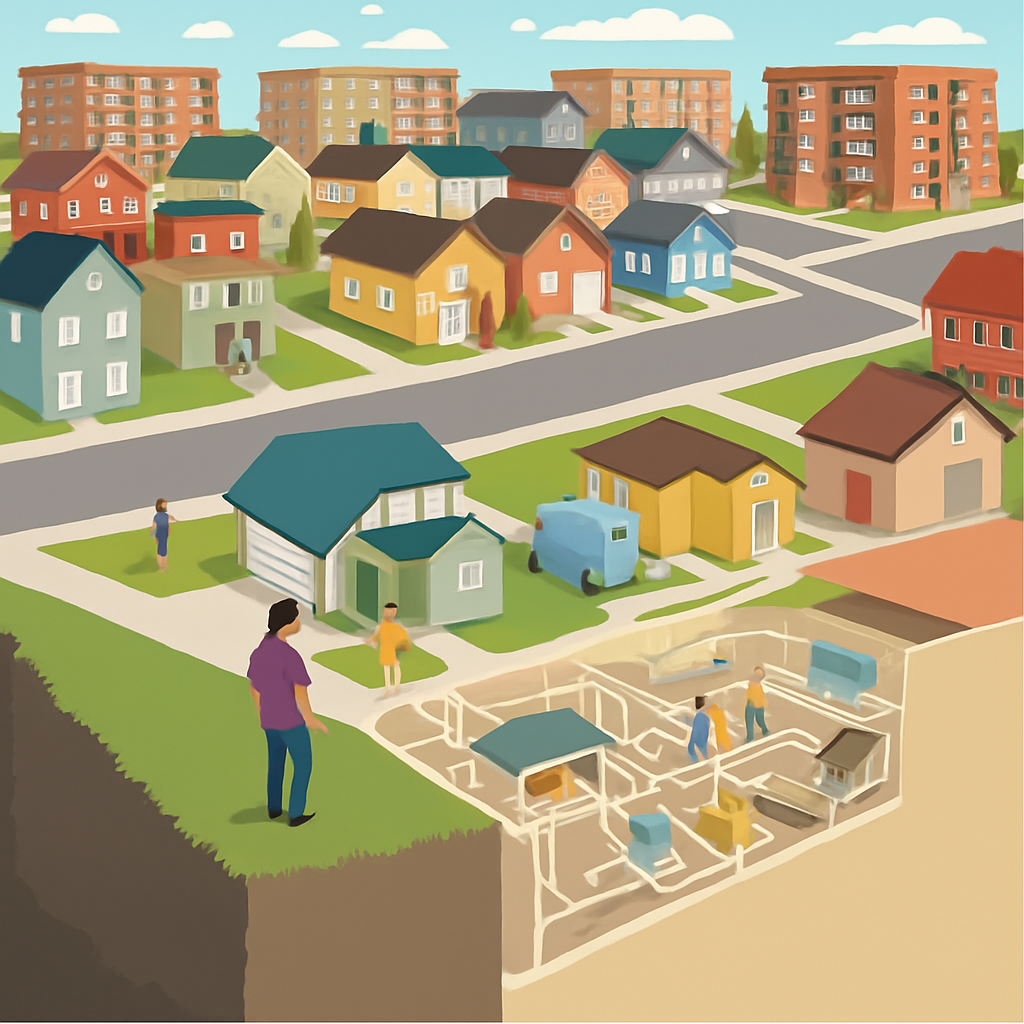
Housing doesn’t begin with construction — it begins with land. When land is made scarce by regulation, prices rise before anything is built. Every downstream cost compounds from there.
This makes higher prices inevitable, not surprising.
The affordability cycle
As prices rise, policies often respond to symptoms rather than inputs. Costs reset higher, subsidies expand, and the next cycle begins from a more expensive baseline.
Without addressing capacity, affordability remains temporary.

Real progress expands options
Expanding housing capacity lowers costs structurally and restores realistic pathways — between renting and owning, moving and staying, planning and adapting.
Progress should increase options, not redefine them downward.